Checkpoint Charlie

Photo Gallery

7 Photos

Click on any image to view in full size

About This Attraction

Checkpoint Charlie stands as one of the most famous symbols of the Cold War and the division of Berlin. Checkpoint Charlie (or “Checkpoint C”) was the Western Bloc’s name for the best-known Berlin Wall crossing point between East Berlin and West Berlin during the Cold War (1947–1991), becoming a symbol of the Cold War, representing the separation of East and West.

It was the designated crossing point for foreign tourists and dignitaries and for members of the Allied armed forces. The name Checkpoint Charlie comes from the NATO phonetic alphabet (Alpha, Bravo, Charlie). After the border crossings at Helmstedt-Marienborn (Alpha) and Dreilinden-Drewitz (Bravo), Checkpoint Charlie was the third checkpoint opened by the Allies in and around Berlin.

Established in October 1961, Checkpoint Charlie was the main gateway for Allied personnel, other non-Germans, and foreign tourists to pass between the two Berlins. (East and West Berliners were prohibited from using the checkpoint and had to seek special permits to cross.)

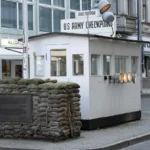
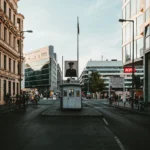
The site gained international fame during the tank standoff of October 1961 when American and Soviet tanks faced each other with weapons ready. Today, visitors can see a replica of the original guard house and explore the renowned Checkpoint Charlie Museum (Mauermuseum), which documents escape attempts and the history of the Berlin Wall.

Interesting Facts

Over 2.6 million between 1949 and 1961 East Germans fled to the West through Berlin before the wall was built.
In October 1961, U.S. and Soviet tanks engaged in a menacing standoff in the middle of Berlin. Photos of this event were seen around the world and have become iconic images of the Cold War.
The guard house on the American side was removed in 1990; it is now on display in the open-air museum of the Allied Museum in Berlin-Zehlendorf.
Refugees from the East start to arrive in West Berlin, and Rainer Hildebrandt starts to record their stories, starting the museum in his flat in 1962.
Checkpoint Charlie was the setting for many thrillers and spy novels, from James Bond in Octopussy to The Spy Who Came In From The Cold.
Although the wall was opened in November 1989 and the checkpoint booth removed on 22 June 1990, the checkpoint remained an official crossing for foreigners and diplomats until German reunification in October 1990.
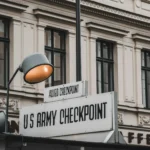
The replica guard house and sign were reconstructed to resemble the first guard house erected during 1961.

Visitor Information

Opening Hours

Open: 24/7, accessible at all times

Entrance Fee

Checkpoint Charlie Site: Free, Checkpoint Charlie Museum: €18.50

Recommended Duration

1 hour

Best Time to Visit

Early Morning, Fall, Morning, Spring, Summer, Weekdays, Weekends, Winter

Address

Friedrichstraße 43-45, 10969 Berlin, Germany

Location & Map

Loading map...

Frequently Asked Questions

Checkpoint Charlie (or "Checkpoint C") was the Western Bloc's name for the best-known Berlin Wall crossing point between East Berlin and West Berlin during the Cold War. It was the designated crossing point for foreign tourists and dignitaries and for members of the Allied armed forces.
The name Checkpoint Charlie comes from the NATO phonetic alphabet (Alpha, Bravo, Charlie). It was the third checkpoint in a series, following Checkpoint Alpha and Checkpoint Bravo.
Yes, the outdoor Checkpoint Charlie site is free to visit 24/7. However, the Checkpoint Charlie Museum requires paid admission: €18.50, students €13.50, pupils aged 7-18 years €9.50, children up to 6 years of age free admission.
A copy of the guard house and the sign that once marked the border crossing was reconstructed later on roughly the same site. The guard house on the American side was removed in 1990; it is now on display in the open-air museum of the Allied Museum in Berlin-Zehlendorf.
In October 1961, U.S. and Soviet tanks engaged in a menacing standoff in the middle of Berlin. Photos of this event were seen around the world and have become iconic images of the Cold War. This confrontation lasted 16 hours before both sides withdrew their tanks.
Take a look through the inventive methods people have used to escape from the GDR, such as a concealed luggage compartment in a VW car, a mini-submarine, a hot air balloon and a collapsed suitcase. . Many citizens managed to escape through Checkpoint Charlie hidden in a Trabant (the most popular East German car). Most hid in the motor or underneath the seat cover.
Although the wall was opened in November 1989 and the checkpoint booth removed on 22 June 1990, the checkpoint remained an official crossing for foreigners and diplomats until German reunification in October 1990.