The Berlin Wall

Photo Gallery

7 Photos
Click on any image to view in full size

About This Attraction

The Berlin Wall stands as one of the most significant historical monuments of the 20th century, symbolizing the division of East and West Berlin during the Cold War. Constructed by the German Democratic Republic (East Germany) starting on August 13, 1961, this concrete barrier completely separated West Berlin from surrounding East Germany and East Berlin until its fall on November 9, 1989.

For more than 28 years, the Wall divided East and West Berlin , creating a stark physical and ideological barrier that affected millions of lives. During the years of the Wall, around 5,000 people successfully defected to West Berlin, while a historic research group at the Centre for Contemporary History (ZZF) in Potsdam has confirmed at least 140 deaths of those who attempted to cross.

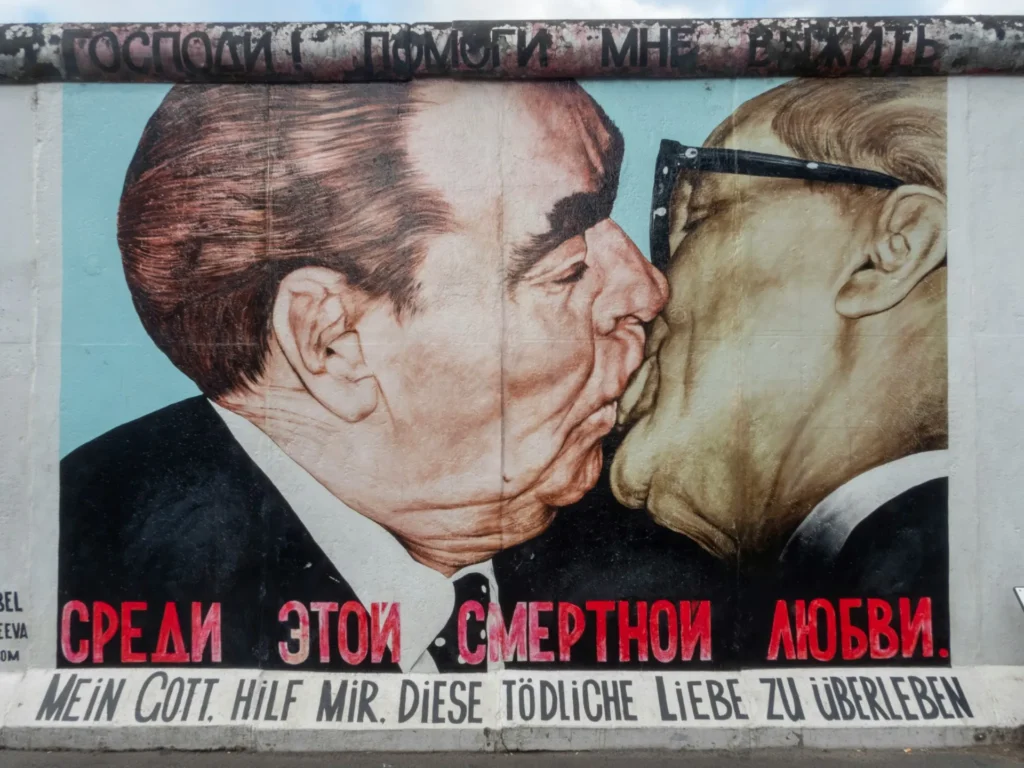
Today, visitors can explore several preserved sections and memorial sites that tell the powerful story of division, escape attempts, and eventual reunification. The most famous remaining sections include the East Side Gallery (1.3 kilometers of wall featuring art by 118 artists from 21 countries), the Berlin Wall Memorial at Bernauer Straße, and the Topography of Terror documentation center.

Interesting Facts

The barrier included guard towers placed along large concrete walls, which circumscribed a wide area (later known as the "death strip") that contained anti-vehicle trenches, "fakir beds" and other defenses.
At 1.3 kilometres, the longest remaining section of the Wall is located on the Spree at the East Side Gallery.
The Wall's demolition officially began on 13 June 1990 and was completed in 1992.
The total length of the Berlin Wall was 155 kilometers, completely encircling West Berlin.

Visitor Information

Opening Hours

Berlin Wall Memorial: Tuesday to Sunday, 10:00 - 18:00 The outdoor exhibition on the memorial grounds on Bernauer Strasse is accessible Monday to Sunday, 8 a.m. to 10 p.m. East Side Gallery: Open daily from 10 a.m. to 5 p.m.

Entrance Fee

Berlin Wall Memorial & East Side Gallery: Free access

Recommended Duration

1-2 hours

Best Time to Visit

Early Morning, Evening, Fall, Late Afternoon, Morning, Spring, Sunset, Weekdays, Weekends, Winter

Address

Bernauer Straße 111, 13355 Berlin, Germany

Location & Map

Loading map...

Frequently Asked Questions

Yes, you can still visit several preserved sections of the Berlin Wall today. Of the concrete barrier that once divided the German capital, only remnants remain, but these are carefully preserved as historical monuments. The main sites include the Berlin Wall Memorial at Bernauer Straße, the East Side Gallery (the longest remaining section at 1.3 kilometers), Checkpoint Charlie, and the Topography of Terror. In many places, metal plates in the ground remind us where the Wall once stood throughout the city.
Berlin was split after World War II when Germany was divided among the Allied powers. The Eastern Bloc claimed that the wall was erected to protect its population from fascist elements conspiring to prevent the "will of the people" in building a socialist state in East Germany. In reality, the wall was built to stop the massive exodus of East Germans fleeing to the West through Berlin. By 1961, approximately 2.7 million East Germans had fled to West Germany, creating a major crisis for the communist government.
The Berlin Wall fell on November 9, 1989. Excerpts from Schabowski's press conference were the lead story on West Germany's two main news programs that night—at 7:17 p.m. on ZDF's heute and at 8 p.m. on ARD's Tagesschau. Later that night, on ARD's Tagesthemen, anchorman Hanns Joachim Friedrichs proclaimed, "This 9 November is a historic day". While the wall was breached that night, its demolition officially began on 13 June 1990 and was completed in 1992
After a few seconds' hesitation, Schabowski replied, "As far as I know, it takes effect immediately, without delay" when asked about new travel regulations at a press conference on November 9, 1989. This accidental announcement led thousands of East Berliners to rush to the border crossings. The Bornholmer Straße border crossing, at the eastern end of the bridge, was the first point of entry on the evening of 9 November 1989 where the wall was opened. Guards, overwhelmed by the crowds and lacking clear orders, eventually opened the gates. When the partition of the city was finally over the first segments were broken off the Berlin Wall in the night from the 10th to the 11th of November 1989 in Bernauer Straße.
The Berlin Wall was ordered by the East German government (German Democratic Republic) under the leadership of Walter Ulbricht, with approval from Soviet leader Nikita Khrushchev. The barrier was constructed by the German Democratic Republic (GDR, East Germany) starting on 13 August 1961. The decision was made in secret by the East German Politburo and was implemented overnight to prevent further mass emigration to the West.
Today, almost nothing is left of it, but what remains has been transformed into powerful memorials and art installations. The eastern side of the wall was painted by 118 artists from 21 countries, hence the name of the longest open-air gallery in the world at the East Side Gallery. A lesser-known fact is that not far from Potsdamer Platz, on the grounds of the "Topography of Terror" documentation centre on Niederkirchnerstraße, a 200-metre-long original piece of the Berlin Wall still stands. The Berlin Wall Memorial shows a 70-metre stretch on the Berlin Wall with border strip and watchtower directly on Bernauer Straße to demonstrate how the border fortifications looked in the 1980s.
For more than 28 years, the Wall divided East and West Berlin. It stood from August 13, 1961, until November 9, 1989 - exactly 28 years, 2 months, and 27 days.
The number of people who died trying to cross the Wall, or as a result of the Wall's existence, has been disputed. A historic research group at the Centre for Contemporary History (ZZF) in Potsdam has confirmed at least 140 deaths. Prior official figures listed 98 as being killed, while some estimates suggest the number could be higher.
Not all segments of the Wall were ground up as the Wall was being torn down. Many segments have been given to various institutions around the world. They can be found, for instance, in presidential and historical museums, lobbies of hotels and corporations, at universities and government buildings, and in public spaces in different countries of the world. The remaining sections in Berlin have been preserved as memorials and historical sites.