Ephesus Ancient City

Photo Gallery

22 Photos
Click on any image to view in full size

About This Attraction

Ephesus (Turkish: Efes) is an ancient city and UNESCO World Heritage Site located 3 kilometers from Selçük in Turkey’s Izmir Province. Founded in the 10th century BC, this archaeological complex spans 663 hectares and was once the fourth-largest city in the Roman Empire with a population of 225,000 at its peak. The site features remarkably preserved ruins from Greek, Roman, and Byzantine periods (600 BC – 1300 AD), including the famous Library of Celsus, a 25,000-seat theater, and remains of the Temple of Artemis – one of the Seven Wonders of the Ancient World. Today, Ephesus attracts over 2 million visitors annually, making it Turkey’s most visited archaeological site after the Hagia Sophia.

This extraordinary ancient metropolis represents one of the Mediterranean’s best-preserved classical cities, where visitors can walk the same marble streets once traversed by emperors, philosophers, and early Christian apostles. The city’s strategic location on the Aegean coast made it a crucial trading hub connecting East and West, while its prosperity under Roman rule created the magnificent architectural legacy that survives today. Ephesus seamlessly blends natural beauty with profound historical significance, offering visitors the chance to explore grand monuments, intricate mosaics, and sophisticated urban planning that showcased the pinnacle of ancient civilization.

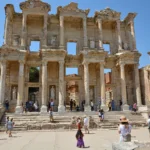
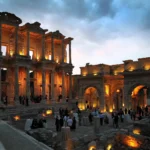
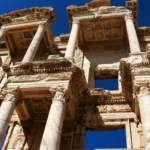
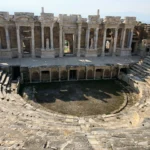
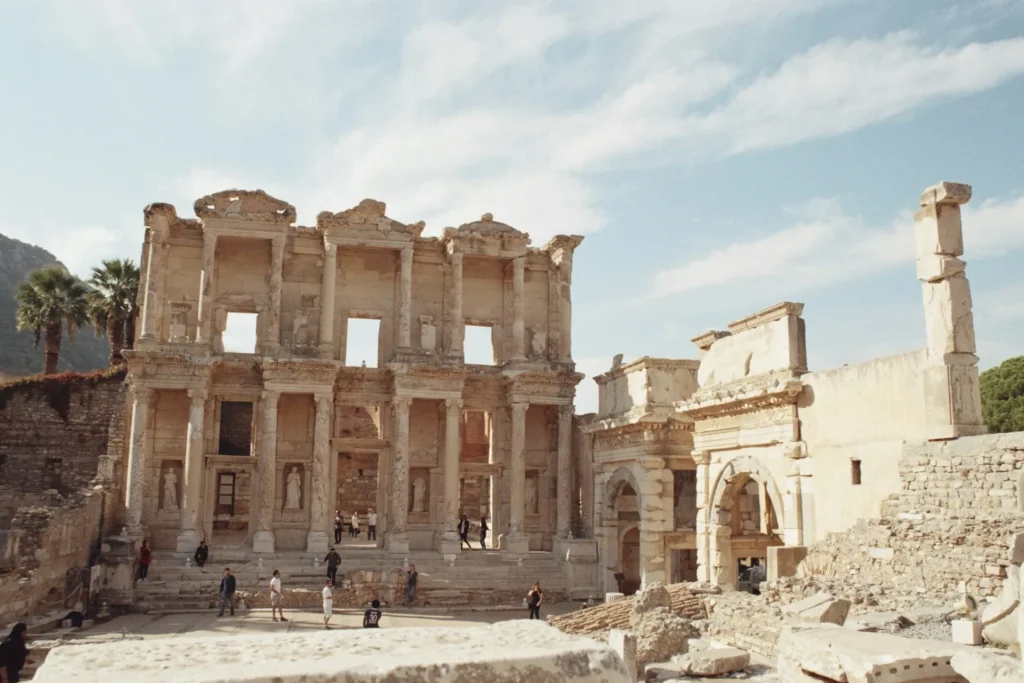
The site’s crown jewel, the Library of Celsus, stands as one of antiquity’s most photographed monuments with its stunning reconstructed facade representing wisdom, virtue, knowledge, and intelligence. The massive Great Theatre, carved into Mount Pion’s hillside, demonstrates remarkable Roman engineering with acoustics so perfect that whispers from the stage can be heard in the highest seats. Beyond these iconic structures, Ephesus reveals layer upon layer of history through its Terrace Houses showcasing Roman luxury, ancient streets lined with columns and fountains, and sacred spaces that witnessed the birth of early Christianity.

Modern Ephesus offers visitors an unparalleled journey through time, where archaeological wonder meets spiritual significance in one of the world’s most important historical sites. Whether exploring the marble-paved Curetes Street, marveling at preserved frescoes in ancient Roman homes, or standing in the theater where Saint Paul once preached, Ephesus delivers an unforgettable experience that brings two millennia of human achievement to life in one of Turkey’s most treasured destinations.

Interesting Facts

Ephesus was the fourth-largest city in the Roman Empire with a population of 225,000 at its peak.
The Library of Celsus was the third-largest library in the ancient world, housing over 12,000 scrolls.
Only 20% of the ancient city has been excavated, despite over 150 years of archaeological work.
The Great Theatre could accommodate 25,000 spectators, making it the largest outdoor theater in the ancient world.
The Temple of Artemis, one of the Seven Wonders of the Ancient World, was twice the size of the Parthenon.
The Terrace Houses showcase Roman luxury with intricate mosaics, frescoes, and advanced plumbing systems that included hot and cold running water.
The Temple of Artemis was destroyed by arson in 356 BC, allegedly on the night of Alexander the Great's birth.
The Temple of Hadrian was built in the 2nd century AD with intricate relief carvings depicting the mythological founding of Ephesus, gods, emperors, and legendary figures.
The Odeon served as an intimate theater for musical performances and town council meetings, while the massive commercial Agora bustled with merchants from across the empire.
The Prytaneion housed the sacred flame of Hestia that burned eternally, representing the heart of the city's civic and religious life.
Ephesus served as the western terminus of the ancient Royal Road, making it a crucial trading hub connecting East and West.
The city's harbor on the Kaystros River eventually silted up, severing Ephesus's economic lifeline and contributing to its decline.

Visitor Information

Opening Hours

April-October: 8:00 AM - 7:00 PM (Daily) November-March: 8:00 AM - 5:00 PM (Daily) Last admission 1 hour before closing Open 365 days a year

Entrance Fee

Main site: €40 per person, Terrace Houses: Additional €15, Children under 8: Free, Audio guide: €20

Recommended Duration

4-6 hours

Best Time to Visit

Early Morning, Late Afternoon, Spring, Weekdays

Address

Ephesus Archaeological Site Atatürk Mahallesi, 35920 Selçuk/İzmir, Turkey

Location & Map

Loading map...

Frequently Asked Questions

Ephesus is located in western Turkey, near the town of Selçuk in Izmir Province, approximately 3 kilometers from Selçuk town center and 18 kilometers from the coastal resort of Kuşadası. The ancient city sits on the Aegean coast of Turkey, about 70 kilometers south of the modern city of Izmir.
Ephesus is located in Turkey (officially the Republic of Türkiye), specifically in the Izmir Province on the country's western Aegean coast. It's situated in the historical region of Ionia in Asia Minor.
Ephesus distances: Istanbul (550 km, 6-hour drive), Ankara (500 km, 5-hour drive), Izmir (70 km, 1-hour drive), Bodrum (170 km, 2.5-hour drive), Antalya (350 km, 4-hour drive), and Pamukkale (190 km, 2.5-hour drive).
The ideal times are spring (April-May) and autumn (September-October) when temperatures are mild and crowds are smaller. Early morning visits (8:00 AM) are recommended to avoid tour groups and heat. Summer visits should be planned for early morning or late afternoon.
Highly recommended. Professional guides provide historical context and stories that bring the ruins to life. Audio guides are available for self-guided tours, but live guides offer personalized experiences and can answer questions.
Comfortable walking shoes with good grip, sun hat, sunscreen, water bottle, and lightweight clothing. The site has minimal shade and uneven marble surfaces. Cameras are allowed throughout the site.
Built in 117 AD, it served as both a library housing 12,000 scrolls and a mausoleum for Roman governor Celsus. The reconstructed facade features statues representing wisdom, virtue, knowledge, and intelligence, with ingenious design elements including optical illusions and double walls for manuscript protection.
Once one of the Seven Wonders of the Ancient World, this massive temple was larger than the Parthenon with 127 marble columns. It was destroyed by arson in 356 BC, later rebuilt, then gradually dismantled by early Christians and damaged by earthquakes. Today, only foundations and one reconstructed column remain.