Pamukkale

Photo Gallery

9 Photos
Click on any image to view in full size

About This Attraction

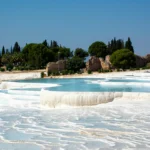
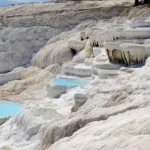
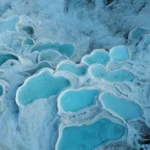
Pamukkale (Turkish: “Cotton Castle“) is a UNESCO World Heritage Site located in southwestern Turkey’s Denizli Province, famous for its dazzling white travertine terraces formed by calcium-rich thermal springs. This extraordinary natural phenomenon, covering 2.7 square kilometers, attracts over 2.5 million visitors annually who come to witness one of the world’s most surreal geological landscapes alongside the extensive ruins of the ancient Greco-Roman city of Hierapolis.

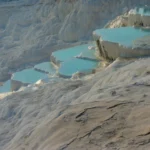
Pamukkale’s otherworldly landscape was created by seventeen natural hot springs that emerge from a cliff face nearly 200 meters high. As these mineral-laden thermal waters cool and flow across the limestone plateau, they deposit brilliant white calcium carbonate (travertine), creating the stepped terraces, petrified waterfalls, and stalactite formations that give Pamukkale its distinctive “cotton castle” appearance. This ongoing natural process means the landscape is constantly evolving, with fresh deposits continuously coating the formations.

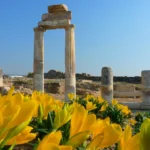
Crowning the travertine terraces lies Hierapolis (Ancient Greek: “Holy City”), one of Turkey’s most impressive archaeological sites. Founded in the 2nd century BC, this ancient Greco-Roman spa city flourished for over a thousand years as a luxury resort where wealthy Romans came to take therapeutic baths in the healing thermal waters.

The crown jewel of Hierapolis is its remarkably preserved Roman theater, built into the hillside and capable of accommodating 15,000 spectators. The site also features one of Turkey’s largest ancient necropoleis, stretching over 2 kilometers with more than 1,200 tombs representing diverse burial traditions from Hellenistic through early Christian times.

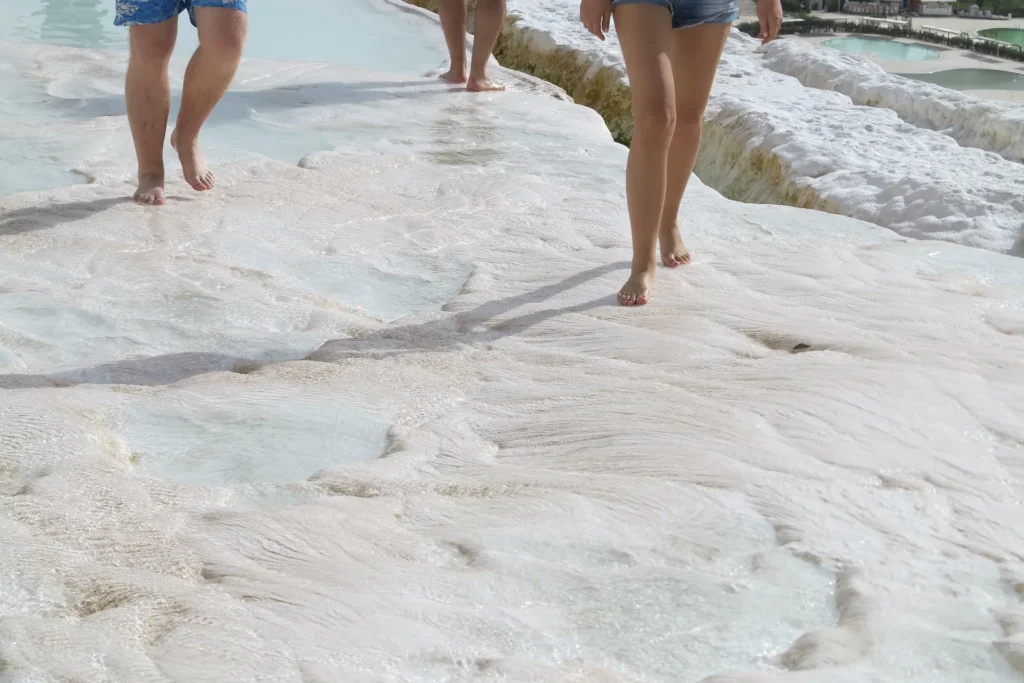
Today, visitors can walk barefoot through the warm mineral pools, explore extensive Roman ruins, and even swim among ancient columns in Cleopatra’s Antique Pool. The site combines breathtaking natural beauty with profound historical significance, offering therapeutic relaxation, archaeological exploration, and some of the most photographed landscapes in Turkey.

Whether seeking natural wonder, historical discovery, or wellness experiences, Pamukkale delivers an unforgettable journey through both geological time and human civilization, explaining why this remarkable destination has captivated visitors for over two millennia.

Interesting Facts

Pamukkale means "Cotton Castle" in Turkish, named for its resembling white cotton fields from a distance.
Seventeen hot springs with temperatures between 35°C and 100°C create the travertine terraces through calcium carbonate deposits.
The terraced basins range dramatically in size, with some less than a meter high while others tower up to six meters.
Hierapolis was founded in the 2nd century BC by the Attalid kings of Pergamon on the site of an ancient Phrygian cult center dedicated to the mother goddess Cybele.
The site attracts over 2.5 million visitors annually, making it one of Turkey's top tourist destinations.
Under Roman rule during the 2nd and 3rd centuries AD, Hierapolis reached its zenith as a luxury resort where wealthy Romans took therapeutic baths.
The Roman theater was built during Emperor Septimius Severus's reign (193-211 AD) with 50 rows of seating arranged in seven sections.
The theater's stage building features exquisite decorative reliefs depicting ritual processions and sacrifices to Artemis of Ephesus.
The Northern Necropolis contains over 1,200 tombs spanning more than 2 kilometers, one of the largest ancient cemeteries in Turkey.
The necropolis includes diverse burial traditions: Hellenistic tumulus barrows, elaborate Roman sarcophagi, and early Christian monuments.
Cleopatra's Antique Pool contains submerged Roman columns from the Temple of Apollo that fell during a 7th-century earthquake.
The Antique Pool maintains a constant temperature of 36°C (97°F) and continues the thermal bathing tradition spanning over two millennia.
The Plutonium or "Gate to Hell" emits toxic volcanic gases and was considered a literal entrance to the underworld by ancient Greeks and Romans.
Priests of Cybele would demonstrate divine protection by entering the Plutonium cave unharmed while sacrificial animals succumbed to carbon dioxide.
The thermal waters are rich in calcium, magnesium, sulfur, and bicarbonate, historically believed to cure ailments from skin conditions to rheumatism.
Ancient physicians established treatment centers at Hierapolis, developing early forms of hydrotherapy and spa medicine.
UNESCO designated Pamukkale-Hierapolis as a World Heritage Site in 1988 for both its natural beauty and cultural significance.
Visitors must walk barefoot on the travertine terraces to protect the delicate calcium carbonate formations from shoe damage.
Many travertine pools are intentionally kept dry on rotation to prevent damage from overuse and allow natural regeneration.
The site serves as a natural laboratory where scientists study calcium carbonate precipitation and real-time geological changes.
The ancient city was abandoned in 1334 after a major earthquake and remained buried under limestone deposits until archaeological excavations began in 1887.

Visitor Information

Opening Hours

North Gate: 8:00 AM - 9:00 PM (Daily, year-round) South Gate: 6:00 AM - 11:00 PM (Daily, year-round) Cleopatra's Antique Pool: 8:00 AM - 8:00 PM (Daily) Site open 365 days a year

Entrance Fee

General admission: €30, Additional €6, Children under 8: Free

Recommended Duration

Full day

Best Time to Visit

Early Morning, Late Afternoon, Spring, Sunrise, Weekdays

Address

Pamukkale-Hierapolis Archaeological Site Pamukkale, 20190 Pamukkale/Denizli, Turkey

Location & Map

Loading map...

Frequently Asked Questions

Pamukkale is located in southwestern Turkey in Denizli Province, approximately 17 kilometers from Denizli city center. The site sits on a 200-meter-high plateau overlooking the Çürüksu River valley, about 240 kilometers from both Izmir and Antalya.
You can wade through the shallow travertine terraces but cannot swim in them. For actual swimming, visit Cleopatra's Antique Pool (additional €6 fee), a thermal pool maintained at 36°C where you can swim among ancient Roman ruins.
To protect the delicate travertine formations, authorities rotate water flow to different sections, allowing some areas to rest and naturally regenerate. This prevents damage from overuse while maintaining the long-term health of the geological formations.
Yes, shoes are strictly prohibited on the travertine terraces to protect the calcium carbonate formations. You must carry your shoes while walking on the white terraces. The surfaces can be slippery and uneven, so walk carefully.
The best times are spring (April-May) and autumn (September-November) for mild weather and fewer crowds. Early morning (8:00 AM) or late afternoon visits offer the best lighting for photography and more peaceful experiences.
Approximately 190 kilometers (2.5-3 hours by car). Many visitors combine both sites in a 2-3 day itinerary, often staying in Selçuk (near Ephesus) and making a day trip to Pamukkale, or vice versa.