Photo Gallery
13 Photos


Click on any image to view in full size
About This Attraction
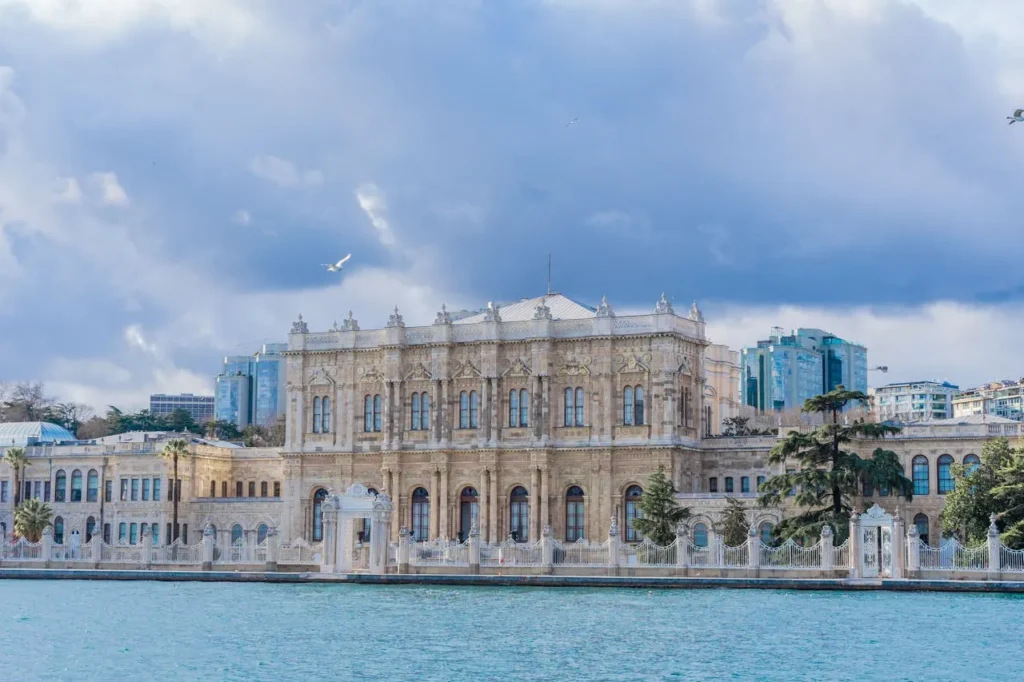
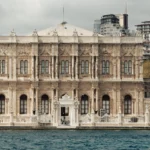
Dolmabahçe Palace stands as Turkey’s largest and most sumptuous palace, magnificently positioned along the European shore of the Bosphorus in Istanbul. Built between 1843 and 1856 by Sultan Abdülmecid I, the palace replaced the medieval Topkapı Palace as the main administrative center of the Ottoman Empire during a critical period of modernization and Westernization known as the Tanzimat era. The palace’s very name—Dolmabahçe, meaning “filled-in garden”—references the land reclaimed from the Bosphorus through an enormous landfill project that created the site for this architectural marvel.
Designed by renowned Armenian architects Garabet Balyan and his son Nigoğayos Balyan, along with Evanis Kalfa, the palace represents a stunning fusion of Baroque, Rococo, and Neoclassical styles with traditional Ottoman architecture. The Balyan family, who served as the Ottoman Empire’s court architects for generations, created a masterpiece that demonstrates the empire’s deliberate effort to adopt European architectural trends while maintaining distinctly Ottoman elements in layout and decoration. The result is a palace unlike any other—European in appearance yet unmistakably Ottoman in its spatial organization and ornamental richness.
The construction cost 5 million Ottoman gold pounds—equivalent to 35 tons of gold—demonstrating the empire’s desire to compete with European palaces in terms of luxury and grandeur. This extraordinary expenditure occurred during a period when the Ottoman Empire faced severe financial pressures, making the palace both a symbol of imperial prestige and a controversial drain on the treasury. Critics argued the massive expense contributed to the empire’s mounting debts, while supporters maintained that projecting power and modernity remained essential for maintaining Ottoman influence in an increasingly European-dominated world.
The palace spans an impressive 45,000 square meters and contains 285 rooms, 46 halls, 6 hammams (Turkish baths), and 68 toilets—statistics that barely capture its overwhelming opulence. The palace consumed 14 tons of gold and 40 tons of silver during its construction and decoration, creating interiors that dazzle visitors with their extravagance. It is divided into three main sections: the Mabeyn-i Hümâyûn or Selamlık (men’s quarters and administrative offices), the Muayede Salonu (ceremonial hall), and the Harem-i Hümâyûn (the sultan’s family apartments).
The Selamlık housed the administrative heart of the empire, where the sultan conducted state business, received foreign ambassadors, and held official ceremonies. The rooms feature exquisite hand-painted ceilings, enormous Bohemian crystal chandeliers, and priceless Hereke carpets—Turkish silk carpets considered among the world’s finest. The Red Room served as the throne room where Sultan Abdülmecid I received dignitaries against a backdrop of crimson silk wall coverings and gilded decorations that proclaimed Ottoman power.
The Muayede Salonu (Ceremonial Hall) represents Dolmabahçe’s crowning architectural achievement. This massive space features a 36-meter-high dome supported by 56 columns, creating an interior that rivals Europe’s grandest ballrooms. The hall is dominated by a 4.5-ton Bohemian crystal chandelier—one of the largest in the world—gifted by Queen Victoria of Britain. The chandelier contains 750 lamps and remains one of Dolmabahçe’s most photographed features. The ceiling features painted panels depicting flowers and fruits, while enormous mirrors amplify the space’s grandeur, reflecting light from countless crystal fixtures.
The Harem section contained the private apartments of the sultan, his mother (the Valide Sultan), his wives, concubines, and children. Unlike the public magnificence of the Selamlık, the Harem offered relative intimacy, though “intimacy” in an Ottoman palace context still meant elaborate decoration and luxurious furnishings. The Sultan’s bedroom, the Valide Sultan’s apartments, and the princes’ quarters each demonstrate refined taste and exceptional craftsmanship. The Blue Hall within the Harem showcases stunning blue-toned Hereke carpets and wall decorations that create a serene atmosphere.
Dolmabahçe introduced numerous technological innovations unprecedented in Ottoman architecture. The palace featured central heating throughout—an extraordinary luxury in the mid-19th century. Gas lighting illuminated the rooms before electricity became available, and later, the palace became one of the first buildings in Istanbul to feature electric lighting. Hydraulic elevators connected different floors, bathrooms had running water with hot and cold taps, and the palace incorporated modern sewage systems far advanced beyond typical urban infrastructure of the era.
The palace gardens deserve special mention. Stretching along the Bosphorus, the gardens feature fountains, pools, pavilions, and rare plants from across the empire. The landscaping combines French formal garden design with Ottoman traditions, creating spaces that provided respite from Istanbul’s heat while maintaining appropriately imperial grandeur. The Crystal Pavilion and the Veliaht (Crown Prince) Apartments in the gardens served as retreats within the larger complex.
The palace served as home to six Ottoman sultans from 1856 until the abolition of the Caliphate in 1924: Abdülmecid I (who commissioned it), Abdülaziz, Murad V, Abdülhamid II, Mehmed V, and Mehmed VI. Each sultan left his mark through renovations and additions, though the palace’s basic layout remained unchanged. Sultan Abdülhamid II, who ruled for 33 years, spent most of his reign here before moving to the more secure Yıldız Palace, fearing assassination attempts.
Following the establishment of the Turkish Republic in 1923 and the abolition of the sultanate and caliphate, Mustafa Kemal Atatürk, founder of modern Turkey, used Dolmabahçe Palace as his presidential residence during summer visits to Istanbul. Although Ankara became the new capital, Atatürk maintained special affection for Dolmabahçe, conducting diplomatic meetings and hosting foreign dignitaries in the palace’s grand halls. He passed away here on November 10, 1938, at 9:05 AM—a moment commemorated by clocks throughout the palace stopped at that exact time.
Atatürk’s death at Dolmabahçe transformed the palace into a national memorial. His bedroom remains preserved exactly as it appeared on the morning of his death, with personal effects, furniture, and even the Turkish flag draped over his bed. Every November 10, Turkey observes a moment of silence at 9:05 AM, and Dolmabahçe becomes a pilgrimage site for Turks honoring the republic’s founder.
The palace opened as a museum in 1984, though it continues serving occasional state functions. Visiting Dolmabahçe requires purchasing timed-entry tickets—separate tickets for the Selamlık and Harem sections or a combination ticket covering both. Photography is prohibited inside to preserve the delicate fabrics, paintings, and furnishings. Guided tours last approximately 60-90 minutes for each section, with English-language tours available. The palace typically attracts long queues, particularly during summer months and weekends, making advance online booking essential.
Dolmabahçe Palace represents more than architectural splendor—it embodies the Ottoman Empire’s complex relationship with modernity, its attempts to balance tradition with Westernization, and its final decades of glory before collapse. Walking through rooms where sultans negotiated treaties, where Atatürk breathed his last, and where 35 tons of gold created almost unimaginable luxury, visitors experience the twilight of empire and the birth of modern Turkey in one extraordinary location.
Interesting Facts
Visitor Information
Opening Hours
Entrance Fee
Recommended Duration
Best Time to Visit
Address
Visnezade, Dolmabahçe Caddesi, 34357 Beşiktaş, Istanbul, TurkeyLocation & Map
Tip: Click and drag to explore the map, use scroll wheel to zoom in/out