Rumelihisarı

Photo Gallery

8 Photos
Click on any image to view in full size

About This Attraction

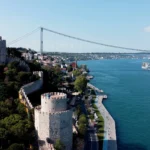
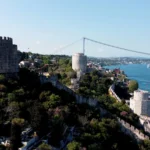
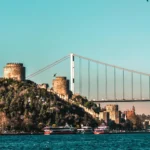
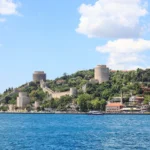
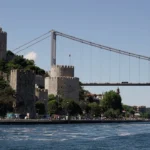
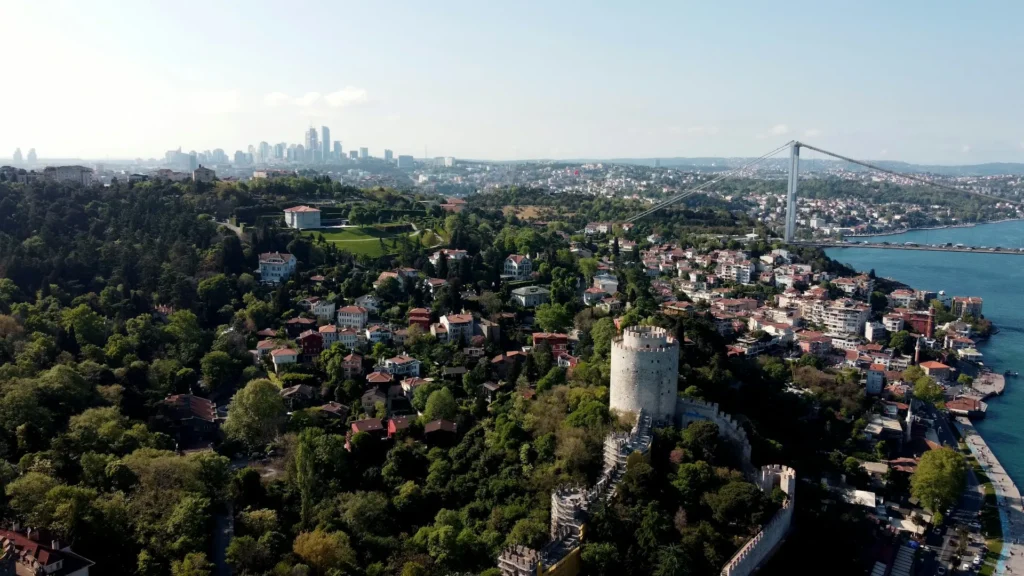
Rumelihisarı (also known as Rumelian Fortress and Roumeli Hissar Fortress) or Boğazkesen Fortress (literally ‘strait-cutter fortress’) is a medieval Ottoman fortress located in Istanbul, Turkey, on a series of hills on the European banks of the Bosphorus.

Conceived and built between 1451 and 1452 CE on the orders of Sultan Mehmed II, the complex was commissioned in preparation for a planned Ottoman siege on the then-Byzantine city of Constantinople, with the goal of cutting off maritime military and logistical relief that could potentially come to the Byzantines’ aid by way of the Bosphorus Strait.

The site for the new fortress was quickly decided to be the narrowmost point of the Bosphorus, where the strait is a mere 660 meters (2,170 ft) wide. This tall, hilltop site on the strait’s European banks was situated directly across from the Anadoluhisarı (“Anatolian Fortress”) on the Anatolian (Asian) banks of the Bosphorus; an older Ottoman fortress built between 1393 and 1394 by Sultan Bayezid I.

It was built in a short period of four months by Sultan Mehmet the Conqueror in 1452 to manage the passing ships in the bosphorus, to create a military-financial control point, and to implement a strong resistance base to prevent attacks from the north of the Bosphorus. Some historical sources state that 300 masters, 700-800 workers, 200 coachmen, boatmen and transporters worked to construct the fortress in this limited time. The architect of the fortress is Muslihiddin Ağa, who is the head architect of Mehmed II. A battalion of 400 Janissaries was stationed in the fortress, and large cannons were placed in the Halil Pasha Tower, the main tower on the waterfront.

Interesting Facts

The Rumelihisarı fortification has one small tower, three main towers, and thirteen small watchtowers placed on the walls connecting the main towers.
Sultan Mehmed II signed his own initials and those of the Prophet Muhammad on the first brick with goat blood.
Built in only 139 days (approximately 4 months) with over 3,000 workers.
After the conquest of Constantinople, the fortress served as a customs checkpoint and occasional prison, notably for the embassies of states that were at war with the Empire.
After suffering extensive damage in the Great Earthquake of 1509, the structure was repaired, and was used continuously until the late 19th century.
Also gives its name to the location, covering a 30-acre area in Sarıyer.

Visitor Information

Opening Hours

Tuesday to Sunday: 09:00 - 18:30 (Closed on Mondays)

Entrance Fee

6 Euros (Museum Pass Istanbul valid)

Recommended Duration

1 hour

Best Time to Visit

Fall, Late Afternoon, Morning, Spring, Weekdays

Address

Yahyakemal Caddesi No.28, 34470 Sarıyer/Istanbul, Turkey

Location & Map

Loading map...

Frequently Asked Questions

Rumelian Castle (Rumelihisarı) is famous for being the strategic fortress built by Sultan Mehmed II in 1452 to control the Bosphorus Strait and prepare for the conquest of Constantinople. It's known as the "strait-cutter fortress" and played a crucial role in Ottoman history.
Plan around 1 hour to explore Rumelian Castle, including climbing the towers and walking the fortress walls. Allow extra time for photography and enjoying the panoramic Bosphorus views from the towers.
At Rumelian Castle you can explore three main towers (Fatih, Halil Pasha, and Zağanos Pasha towers), fortress walls, a small museum with artifacts, panoramic Bosphorus views, and the first Turkish inscription of the Bosphorus.
Rumelian Castle was built by Ottoman Sultan Mehmed II (Mehmed the Conqueror) between 1451-1452, just before the conquest of Constantinople. It was designed by architect Muslihiddin Ağa and completed in only 4 months with over 3,000 workers.
Rumelian Castle played a crucial role in the 1453 conquest of Constantinople by controlling the Bosphorus Strait and cutting off Byzantine supply lines. It worked with Anadolu Fortress to create an impenetrable naval blockade, leading to Ottoman victory.
Yes, Rumelian Castle serves as an open-air venue for seasonal concerts, art festivals, and special events including the Istanbul Music Festival. The fortress provides a unique historic setting for cultural performances throughout the year.