Basilica Cistern

Photo Gallery

10 Photos
Click on any image to view in full size

About This Attraction

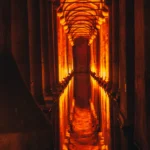
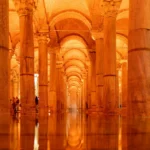
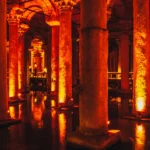
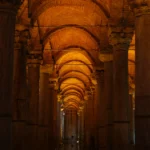
The Basilica Cistern (Yerebatan Sarnıcı), also known as the “Sunken Palace,” stands as one of Istanbul’s most extraordinary and mysterious underground marvels. Built in the 6th century during the reign of Byzantine Emperor Justinian I, this magnificent subterranean water reservoir is the largest of several hundred ancient cisterns that lie beneath Istanbul, representing a masterpiece of Byzantine engineering that has captivated visitors for decades.

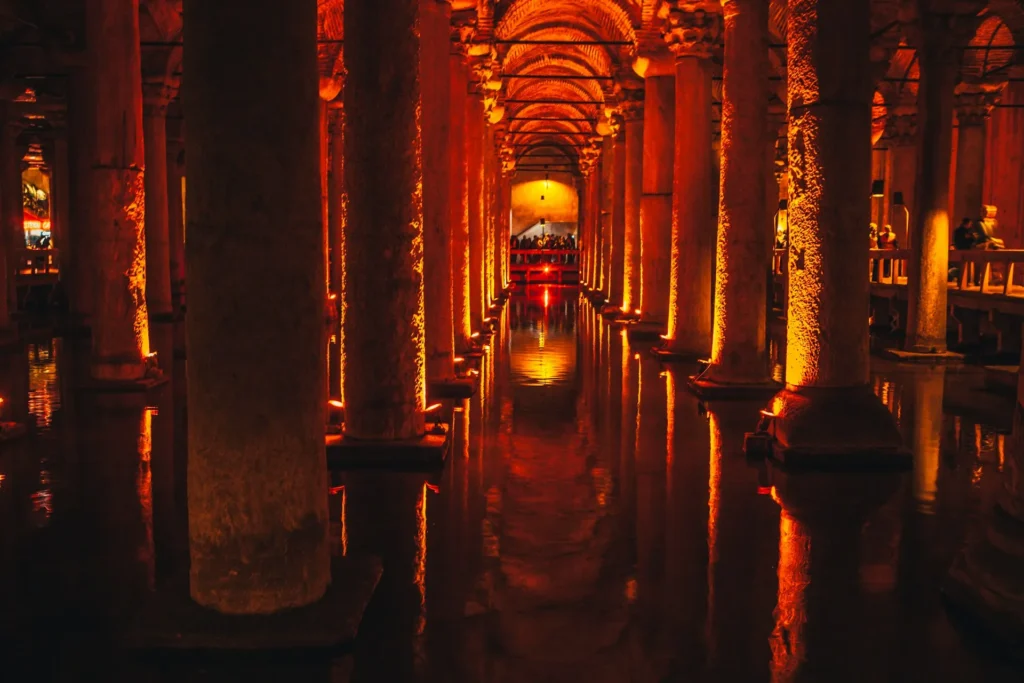
Spanning nearly 10,000 square meters with the capacity to hold 80,000 cubic meters of water, the cistern is supported by a forest of 336 marble columns arranged in 12 rows of 28 columns each. These towering columns, each approximately 9 meters high, were salvaged from ancient Greek and Roman temples and buildings across the empire, creating a unique archaeological tapestry where Corinthian, Ionic, and Doric capitals tell stories of civilizations past.

The cistern’s most enigmatic and photographed features are the two legendary Medusa heads positioned as column bases in the northwest corner. These carved marble blocks, with their origins shrouded in mystery, are positioned one upside down and one on its side, creating an atmosphere of ancient mystique that has inspired countless legends and theories about their protective or symbolic significance.

Originally called “Basilica” because it was located under the Stoa Basilica, a large public square on the First Hill of Constantinople, this underground wonder served as the primary water supply for the Great Palace and surrounding Byzantine structures. After centuries of abandonment during Ottoman times, the cistern was rediscovered and transformed into a museum, where today’s visitors can walk along elevated walkways through dimly lit chambers that echo with the whispers of Byzantine history.

The cistern’s atmospheric beauty, enhanced by dramatic lighting and the gentle sounds of dripping water, creates an almost otherworldly experience that transports visitors back 1,500 years to the height of the Byzantine Empire.

Interesting Facts

Built during the 6th century reign of Byzantine Emperor Justinian I, who also commissioned the Hagia Sophia, representing the height of Byzantine architectural achievement.
Required approximately 7,000 workers and 38 years to complete construction, with many columns salvaged from ancient Greek and Roman temples across the empire.
Has survived approximately 22 major earthquakes since its construction, testament to the remarkable engineering skills of Byzantine builders.
Houses two mysterious Medusa heads used as column bases, with one positioned upside down and one sideways, possibly to neutralize their mythological power to turn viewers to stone.
Featured in the 1963 James Bond film "From Russia with Love" where Bond navigates through the cistern by boat, and later in Dan Brown's novel "Inferno" and its 2016 film adaptation.
The famous "Weeping Column" features carved peacock eyes, drooping branches, and teardrop shapes believed to commemorate the hundreds of slaves who died during construction.

Visitor Information

Opening Hours

Daily: 09:00 AM - 10:00 PM Open every day of the week Special Night Shift hours: 07:30 PM - 10:00 PM

Entrance Fee

Standard Entry: 1,500 TL (approximately $50) Night Shift Entry (7:30 PM - 10:00 PM): 2,000 TL Children under 7: Free

Recommended Duration

30 minutes to 1 hour for standard visit 1.5 hours for detailed exploration and photography

Best Time to Visit

Early Morning, Fall, Spring, Weekdays

Address

Alemdar, Yerebatan Cd. 1/3, 34110 Fatih/İstanbul, Turkey Located 150 meters southwest of Hagia Sophia in Sultanahmet

Location & Map

Loading map...

Frequently Asked Questions

The Basilica Cistern is special as the largest surviving Byzantine underground water reservoir in the world, featuring 336 ancient marble columns in a cathedral-like setting. Its most distinctive features include the mysterious Medusa heads used as column bases, the atmospheric lighting that creates an otherworldly ambiance, and its unique status as an underground "palace" that showcases 1,500 years of history. The combination of Byzantine engineering, recycled Roman and Greek architectural elements, and mythological intrigue makes it unlike any other attraction in the world.
Absolutely! The Basilica Cistern offers a unique and unforgettable experience that combines history, architecture, mythology, and atmosphere in one remarkable location. It provides a cool respite from Istanbul's heat, features in famous films like James Bond, and offers incredible photography opportunities. The cistern's mysterious ambiance, architectural grandeur, and historical significance make it one of Istanbul's most memorable attractions, though visitors should be prepared for the entrance fee and potential crowds.
The Basilica Cistern is located in Istanbul, Turkey's largest city and former capital of both the Byzantine and Ottoman empires. Istanbul is situated in the northwest of Turkey, straddling Europe and Asia across the Bosphorus Strait. The cistern is specifically located on the European side in the historic Sultanahmet district, which contains many of Turkey's most important historical monuments and represents the heart of ancient Constantinople.
The Basilica Cistern is located in the Sultanahmet district of Istanbul, just 150 meters southwest of the famous Hagia Sophia. The exact address is Alemdar, Yerebatan Cd. 1/3, 34110 Fatih/İstanbul. It sits in the heart of Istanbul's historic peninsula, within easy walking distance of major attractions including the Blue Mosque, Topkapi Palace, and the Grand Bazaar. The entrance is accessed via Yerebatan Caddesi (street), while the exit leads to Alemdar Caddesi. The location is easily reached by tram (T1 line to Sultanahmet station), metro, bus, or taxi.
Yes, the Basilica Cistern is currently open to visitors daily from 09:00 AM to 10:00 PM, seven days a week throughout the year. After extensive restoration work, it reopened to the public on July 22, 2022, with improved walkways, enhanced lighting, and modern safety features. The cistern also offers special "Night Shift" experiences from 7:30 PM to 10:00 PM with unique lighting and cultural events. It's only closed briefly between 6:30 PM and 7:30 PM for preparation of evening programs.
No, the Basilica Cistern is not free to enter. As of 2025, the standard entrance fee is 1,500 Turkish Lira (approximately $50) for regular daytime visits, and 2,000 TL for special Night Shift experiences. The high entrance fee reflects its status as a premium attraction and helps fund ongoing conservation efforts. However, children under 7 years old and Turkish citizens over 65 can enter free of charge. The Museum Pass Istanbul is not valid here since it's operated by the Istanbul Metropolitan Municipality rather than the national ministry.
The Basilica Cistern was originally built in the 6th century as a massive underground water storage and filtration system to supply fresh water to the Great Palace of Constantinople (the Byzantine imperial residence) and surrounding important buildings including the Hagia Sophia. With a capacity to hold 80,000 cubic meters of water, it served as the primary water reservoir for the city's most critical structures. During the Ottoman period, it continued to supply water to Topkapi Palace and helped sustain the city during times of siege or drought when external water sources were cut off. Today, it functions as a museum and cultural venue while maintaining only shallow decorative water for atmospheric effect.