Hippodrome

Photo Gallery

9 Photos
Click on any image to view in full size

About This Attraction

The Hippodrome of Constantinople (Turkish: Hipodrom) was a circus that was the sporting and social centre of Constantinople, capital of the Byzantine Empire. Today it is a square in Istanbul, Turkey, known as Sultanahmet Square (Turkish: Sultanahmet Meydanı).

The word hippodrome comes from the Greek hippos (ἵππος), horse, and dromos (δρόμος), path or way. For this reason, it is sometimes also called Atmeydanı (“Horse Square”) in Turkish. The Hippodrome of Constantinople was a massive public arena that served as the heart of Byzantine social and sporting life for centuries.

Constructed in 203, during the reign of the emperor Septimius Severus, and expanded after 324 by Constantine the Great, it was about 130 meters wide and 450 meters long. The hippodrome could accommodate about 40,000-50,000 people. The Byzantine emperors loved nothing more than an afternoon at the chariot races, and this rectangular arena alongside Sultanahmet Park was their venue of choice.

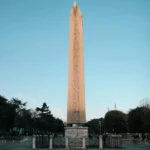
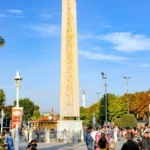
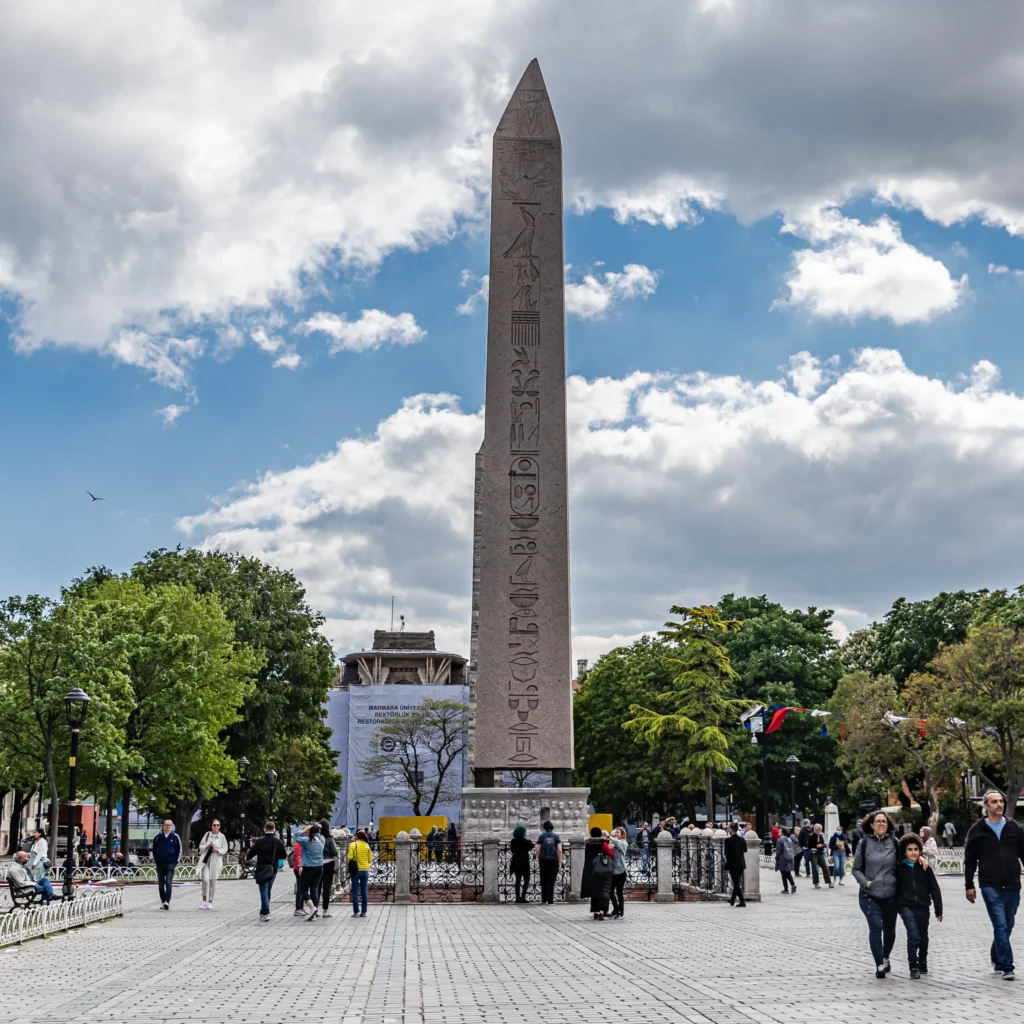
The course of the old racetrack has been indicated with paving, although the actual track is some 2 m (6.6 ft) below the present surface. The surviving monuments of the Spina, the two obelisks and the Serpentine Column, now sit excavated in pits in a landscaped garden. The Hippodrome was the center of Byzantine life for 1000 years and continued to serve as a public gathering place throughout the Ottoman period.

The arena witnessed some of history’s most dramatic events, including the devastating Nika Riots of 532 AD when Emperor Justinian ordered the massacre of 30,000 people. Today, visitors can walk through Sultanahmet Square and see the surviving monuments that once decorated the central spina of this ancient racing venue.

Interesting Facts

Built in 203 AD by Emperor Septimius Severus, expanded by Constantine the Great in 324 AD.
Inspired by Rome's Circus Maximus - second largest chariot racing venue after Rome.
Scene of famous Nika Riots in 532 AD where 30,000 people were massacred by Emperor Justinian's forces.
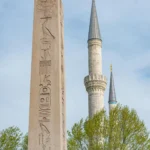
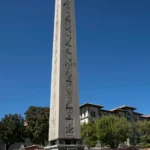
Contains three ancient monuments on former spina: Obelisk of Theodosius, Serpent Column, Walled Obelisk.
Obelisk of Theodosius is 3,500 years old, brought from Karnak Temple in Egypt in 390 AD.
Serpent Column originally stood at Temple of Apollo in Delphi from 478 BC.
German Fountain added in 1900 to commemorate Kaiser Wilhelm II's visit.
Site of public executions, celebrations, and political demonstrations throughout history.
Political discussions and imperial proclamations often made here.

Visitor Information

Opening Hours

Open 24 hours

Entrance Fee

Free

Recommended Duration

30 minutes

Best Time to Visit

Fall, Morning, Spring, Summer, Weekdays

Address

Sultanahmet Meydanı, Sultanahmet, 34122 Fatih/Istanbul

Location & Map

Loading map...

Frequently Asked Questions

The Hippodrome of Constantinople was the ancient chariot racing stadium that served as the social and political center of the Byzantine Empire for over 1,000 years. Built in 203 AD by Emperor Septimius Severus and expanded by Constantine the Great, it could hold 40,000-50,000 spectators. Today known as Sultanahmet Square, it's important as one of the few surviving Byzantine sites in Istanbul and home to ancient monuments including the 3,500-year-old Obelisk of Theodosius.
Yes, the Hippodrome of Constantinople (now Sultanahmet Square) is completely free to visit and open 24 hours daily. It's an open-air public square where you can see the surviving ancient monuments from the original racing track. The three main monuments - Obelisk of Theodosius, Serpent Column, and Walled Obelisk - are clearly marked with informational boards.
Visitors can see three ancient monuments that once decorated the central spina (dividing barrier) of the racing track: the Obelisk of Theodosius (3,500-year-old Egyptian obelisk), the Serpent Column (bronze column from ancient Delphi), and the Walled Obelisk (Byzantine-era monument). The German Fountain from 1900 and paving stones indicating the original track course are also visible.
The Hippodrome of Constantinople is located in Sultanahmet Square in the Fatih district of Istanbul. It's directly adjacent to the Blue Mosque, two minutes walk from Hagia Sophia, and four minutes from Topkapı Palace. The easiest access is via the Sultanahmet tram stop on the T1 line, which drops you right at the square.
The Hippodrome witnessed many dramatic historical events, most notably the Nika Riots of 532 AD when 30,000 people were massacred by Emperor Justinian's forces during chariot racing protests. It was also the site of imperial ceremonies, public executions, political demonstrations, and celebrations. The venue served as a direct communication point between emperors and citizens for centuries.
Yes, Sultanahmet Square (the Hippodrome) is very family-friendly as a pedestrian-only public space with wide walkways, benches, and open areas. Children can safely walk around and explore the ancient monuments while learning about Byzantine history. The free admission makes it budget-friendly for families, and its central location allows easy combination with nearby family attractions.