Blue Mosque

Photo Gallery

8 Photos
Click on any image to view in full size

About This Attraction

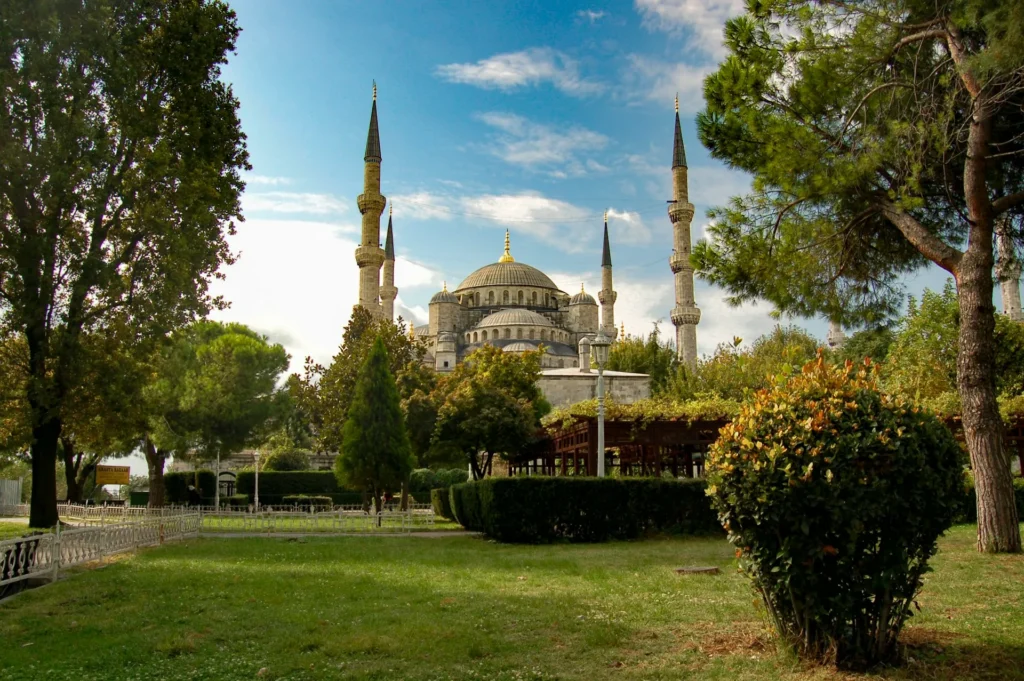
The Blue Mosque, officially known as the Sultan Ahmed Mosque (Sultan Ahmet Camii), stands as one of Istanbul’s most magnificent architectural masterpieces and an enduring symbol of Ottoman grandeur. Built between 1609 and 1617 during the reign of Sultan Ahmed I, this UNESCO World Heritage site captivates visitors with its extraordinary beauty, spiritual significance, and architectural innovation that has defined Istanbul’s skyline for over 400 years.

The mosque earns its popular name from the breathtaking interior adorned with over 20,000 handmade blue Iznik tiles that create an ethereal azure glow throughout the prayer hall. These exquisite ceramic masterpieces feature intricate floral patterns including tulips, roses, carnations, and cypresses, representing the pinnacle of Ottoman ceramic artistry. The central dome soars 43 meters high with a diameter of 23.5 meters, supported by four massive “elephant foot” pillars and surrounded by cascading semi-domes that create a harmonious architectural symphony.

What makes the Blue Mosque truly unique is its six slender minarets – an unprecedented feature that caused considerable controversy, as only the Grand Mosque in Mecca possessed the same number at the time. Legend suggests this resulted from a miscommunication when Sultan Ahmed I requested “altın minaret” (golden minarets) but the architect heard “altı minaret” (six minarets).

Strategically positioned across from the iconic Hagia Sophia in the heart of Sultanahmet Square, the Blue Mosque was deliberately designed to rival and complement its Byzantine neighbor, symbolizing the triumph of Ottoman architecture. The mosque complex (külliye) includes Sultan Ahmed I’s ornate tomb, a former madrasah (Islamic school), and the historic Arasta Bazaar, reflecting the holistic approach of Ottoman urban planning.

Today, this living monument continues to serve as an active place of worship while welcoming millions of visitors annually who come to experience its serene atmosphere, marvel at its architectural brilliance, and witness one of the finest examples of classical Ottoman mosque design.

Interesting Facts

Built between 1609-1617 during the reign of Sultan Ahmed I, who was only 19 years old when construction began and died shortly after its completion at age 27.
The only mosque in Istanbul with six minarets, causing historical controversy as it matched the number at the Grand Mosque in Mecca - resolved when Sultan Ahmed I commissioned a seventh minaret for Mecca.
Interior features over 20,000 handmade Iznik ceramic tiles in more than 50 different tulip and floral designs, created when Ottoman pottery art reached its absolute peak.
Construction monopolized the entire Iznik tile industry during the building period, with tile quality decreasing over time as prices were fixed by royal decree while general costs increased.
Originally illuminated by ornate lamps covered with gold and gems, with ostrich eggs hung from chandeliers to repel spiders and prevent cobwebs.
Built on the former site of the Byzantine Hippodrome, where ancient stone seats from the imperial box were discovered during early 20th-century excavations.
Designed by Sedefkâr Mehmed Ağa, a student of the legendary Ottoman architect Mimar Sinan, representing the culmination of classical Ottoman architectural tradition.
Became the center of its own neighborhood - the entire Sultanahmet district takes its name from this mosque.

Visitor Information

Opening Hours

Daily: 08:30 AM - 06:30 PM (varies seasonally) Closed during five daily prayer times (approximately 90 minutes total) Special Friday closure: Until 2:30 PM for Friday prayers Open every day of the year

Entrance Fee

Free

Recommended Duration

30-45 minutes for basic visit 1-2 hours with guided tour and detailed exploration

Best Time to Visit

Early Morning, Fall, Late Afternoon, Spring, Weekdays

Address

Sultan Ahmet, Atmeydanı Cd. No:7, 34122 Fatih/İstanbul, Turkey Located in Sultanahmet Square, directly across from Hagia Sophia

Location & Map

Loading map...

Frequently Asked Questions

The Blue Mosque is special for several remarkable features that make it truly unique among world landmarks. Most notably, it's the only mosque in Istanbul with six minarets, a feature that was controversial when built as it matched the Grand Mosque in Mecca. The interior is adorned with over 20,000 handmade Iznik tiles in stunning blue hues, creating an ethereal atmosphere that gives the mosque its nickname. The mosque represents the pinnacle of Ottoman architecture, featuring a magnificent central dome supported by four massive "elephant foot" pillars, illuminated by 260 stained glass windows. Its strategic location directly across from Hagia Sophia symbolizes the architectural dialogue between Islamic and Byzantine traditions, making it a masterpiece of both spiritual and historical significance.
Absolutely! The Blue Mosque is considered one of Istanbul's must-see attractions and is worth visiting for multiple reasons. As a UNESCO World Heritage site and one of the finest examples of Ottoman architecture, it offers an unparalleled cultural and historical experience. The mosque's stunning beauty, from its cascading domes and six minarets to the breathtaking blue tile interior, provides visitors with an awe-inspiring experience. What makes it even more worthwhile is that admission is completely free, making it accessible to all travelers. The mosque is also an active place of worship, allowing visitors to witness living Islamic traditions while exploring architectural brilliance. Its central location in Sultanahmet makes it easy to combine with visits to Hagia Sophia, Topkapi Palace, and other major attractions.
The Blue Mosque is located in Istanbul, Turkey's largest city and former capital of the Ottoman Empire. Istanbul is situated in the northwest of Turkey, straddling both the European and Asian continents across the Bosphorus Strait. The mosque is specifically located on the European side of Istanbul, in the historic peninsula that was once Constantinople. This strategic location places it at the heart of Turkey's most significant historical and cultural region, where East meets West. Istanbul is easily accessible from anywhere in Turkey by plane, bus, or train, making the Blue Mosque a central destination for both domestic and international visitors exploring Turkish heritage.
The Blue Mosque is located in the Sultanahmet district of Istanbul, specifically in Sultanahmet Square (Sultan Ahmet Meydanı). This is in the historic Fatih district on the European side of Istanbul. The mosque sits directly across from the famous Hagia Sophia, creating one of the most iconic architectural pairs in the world.
The mosque earned its nickname from the stunning blue Iznik tiles that cover the interior walls. Over 20,000 handmade ceramic tiles in various shades of blue create an ethereal atmosphere, especially when illuminated by natural light filtering through the stained glass windows. The official name is Sultan Ahmed Mosque, named after Sultan Ahmed I who commissioned its construction.
The mosque is famous for having six minarets, making it the only mosque in Istanbul with this feature. Most Ottoman mosques have two or four minarets. The central dome is supported by four massive "elephant foot" pillars and surrounded by cascading semi-domes. The interior showcases over 20,000 handmade Iznik tiles and features more than 260 stained glass windows creating a magnificent interplay of light and color.
The mosque closes to non-worshippers during five daily prayer times, which vary by season. Typically, these closures last about 90 minutes total throughout the day. On Fridays, the mosque is closed to tourists until 2:30 PM for the special Friday prayers. It's recommended to check the current prayer schedule before visiting to avoid disappointment.
Yes, modest dress is required for all visitors. Men and women must cover shoulders and knees. Women must cover their heads with a scarf (available for purchase at the entrance if needed). Shoes must be removed before entering the prayer hall. Free plastic bags are provided for shoe storage.
A basic visit takes 30-45 minutes to appreciate the main architectural features and interior beauty. If you want to explore thoroughly, read the informational displays, and take photographs, allow 1-2 hours. Guided tours typically last 45-60 minutes and provide valuable historical and cultural context.
Absolutely! The two landmarks face each other across Sultanahmet Square, making them perfect for a combined visit. Many visitors explore both in the same day along with other nearby attractions like Topkapi Palace, the Basilica Cistern, and the Grand Bazaar. The proximity makes it easy to walk between these historic sites.