Holocaust Memorial

Photo Gallery

8 Photos
Click on any image to view in full size

About This Attraction

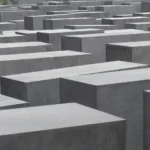
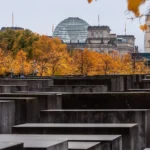
The Memorial to the Murdered Jews of Europe, commonly known as the Holocaust Memorial, stands as Germany’s central Holocaust memorial and one of the most powerful and moving monuments in Berlin. Located in the heart of the city near Brandenburg Gate, this profound memorial commemorates the up to six million Jewish victims of the Nazi Holocaust.

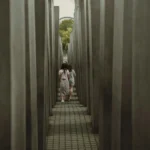
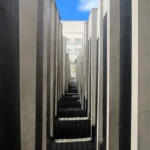
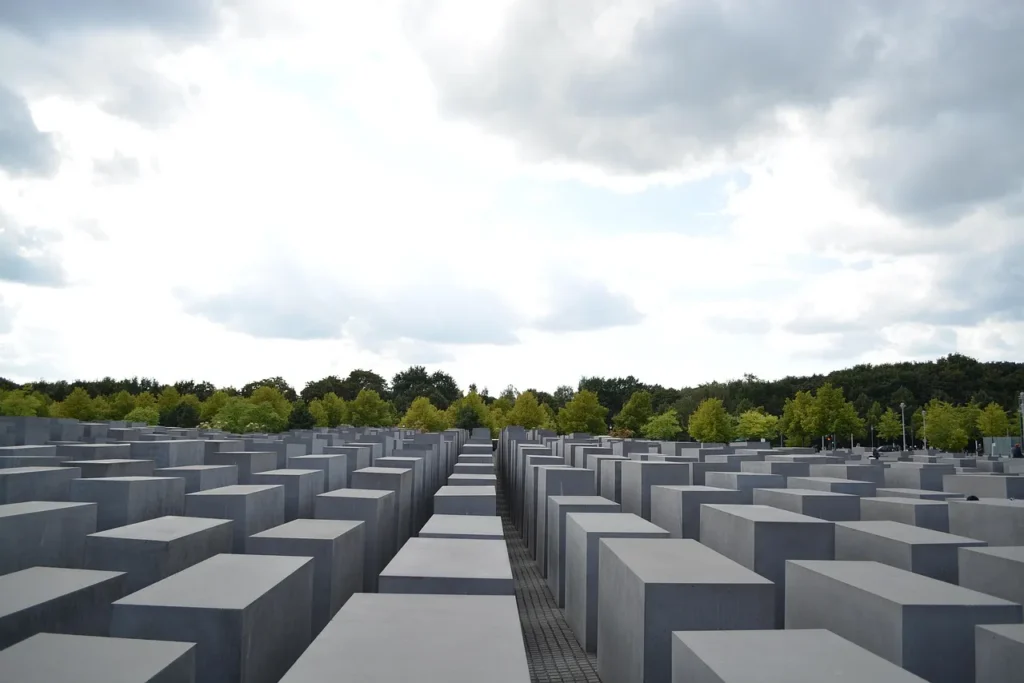
Designed by New York architect Peter Eisenman and inaugurated on May 10, 2005, the memorial consists of 2,711 concrete stelae (rectangular blocks) arranged in a grid pattern across 19,073 square meters of undulating terrain. The stelae vary dramatically in height from 0.2 to 4.7 meters, creating a labyrinthine landscape that visitors can enter from all four sides and navigate through narrow pathways.

The memorial’s abstract design is intentionally open to interpretation, with no inscriptions, symbols, or explicit references to Judaism or the Holocaust visible on the surface. Eisenman refused to provide a definitive explanation for his design, stating he wanted to convey “a sense of discomfort and confusion, order without reason.” The varying heights and the undulating ground create a disorienting experience meant to evoke feelings of unease and contemplation.

Beneath the field of stelae lies the underground Information Centre (Ort der Information), designed by exhibition designer Dagmar von Wilcken. This 800-square-meter space provides essential historical context through four themed rooms that document the persecution and extermination of European Jews. The center features the “Room of Names,” where short biographies of Holocaust victims are continuously read aloud, the “Room of Families” showcasing 15 family stories, the “Room of Sites” displaying information about 220 locations of persecution across Europe, and the “Room of Dimensions” providing statistical and geographical context.

The memorial’s location is historically significant, situated on the former “death strip” where the Berlin Wall once stood, and near the sites of Joseph Goebbels’ residence and Hitler’s Führerbunker. This placement creates a powerful juxtaposition between the locations where the Holocaust was planned and where its victims are now commemorated.

The memorial serves not only as a place of remembrance but also as a warning to future generations. It attracts nearly half a million visitors annually from around the world, serving as an essential educational resource and a space for reflection on one of humanity’s darkest chapters.

Interesting Facts

Contains exactly 2,711 concrete stelae - the number that could fit in the designated space.
Covers 19,073 square meters (about 4.7 acres) in central Berlin.
Each stela is 2.38m long, 0.95m wide, with heights from 0.2m to 4.7m.
All stelae are coated with anti-graffiti paint to prevent vandalism.
Construction began April 1, 2003, and finished December 15, 2004.
Information Centre contains names of approximately 3 million Holocaust victims.
The design deliberately lacks any symbols, inscriptions, or explicit Holocaust references.
Open 24/7 with no barriers or fencing around the memorial.

Visitor Information

Opening Hours

ield of Stelae: Always accessible (24/7, free) Information Centre: Tuesday-Sunday 10:00 AM - 6:00 PM Closed: Mondays, December 24-26, December 31 (from 4 PM) Last admission: 45 minutes before closing

Entrance Fee

Free

Recommended Duration

1 hour

Best Time to Visit

Afternoon, Fall, Morning, Spring, Weekdays, Weekends

Address

Cora-Berliner-Straße 1, 10117 Berlin, Germany

Location & Map

Loading map...

Frequently Asked Questions

The Holocaust Memorial is special as Germany's central Holocaust memorial, featuring a unique abstract design of 2,711 concrete blocks that create a disorienting, contemplative experience. Its power lies in its intentional ambiguity - no inscriptions or symbols - allowing visitors to create personal meaning while honoring six million Jewish victims through its underground Information Centre with individual victim stories.
Absolutely. This is one of the most important and moving memorials in the world, offering both a powerful abstract artistic experience above ground and comprehensive historical education below. It's free to visit, centrally located, and provides essential understanding of Holocaust history through personal victim stories and historical documentation.
The Holocaust Memorial is located in central Berlin, Germany, in the Mitte district at Cora-Berliner-Straße 1. It's situated between Brandenburg Gate and Potsdamer Platz, easily accessible via Brandenburg Gate S-Bahn/U-Bahn station, and within walking distance of major Berlin attractions.
Allow 1.5-2.5 hours for a complete visit. Walking through the field of stelae takes 30-60 minutes, while the Information Centre requires 60-90 minutes to properly absorb the historical documentation and victim testimonies. Many visitors find they need time to reflect between the two experiences.
Walking between the stelae on designated pathways is encouraged and intended, but climbing on the blocks is inappropriate and disrespectful. The memorial is designed for visitors to walk through the maze-like passages to experience the intended disorientation and contemplation.
The field of stelae has no age restrictions, but the Information Centre is not recommended for children under 14 due to the graphic and emotionally difficult historical content.
es, the memorial is fully accessible. Special marked passages accommodate wheelchair users and people with walking disabilities throughout the field of stelae, and the Information Centre is accessible via elevator.
This is a solemn place of remembrance requiring respectful behavior. Avoid climbing on the stelae, playing games, or taking inappropriate selfies. Many visitors bring flowers to place on the blocks. Maintain quiet, respectful demeanor and remember you're in a memorial to six million murdered people.