
For nearly half a century, Berlin stood as the epicenter of the Cold War, a city literally torn in two by concrete, barbed wire, and ideological conflict. From the ashes of World War II emerged a divided metropolis that would become the most potent symbol of East-West tensions, where families were separated overnight and freedom was measured in meters. Understanding Berlin’s Cold War history isn’t just about learning dates and events – it’s about comprehending how ordinary people lived through extraordinary times in one of history’s most dramatic chapters.
The Seeds of Division: Post-War Berlin (1945-1948)
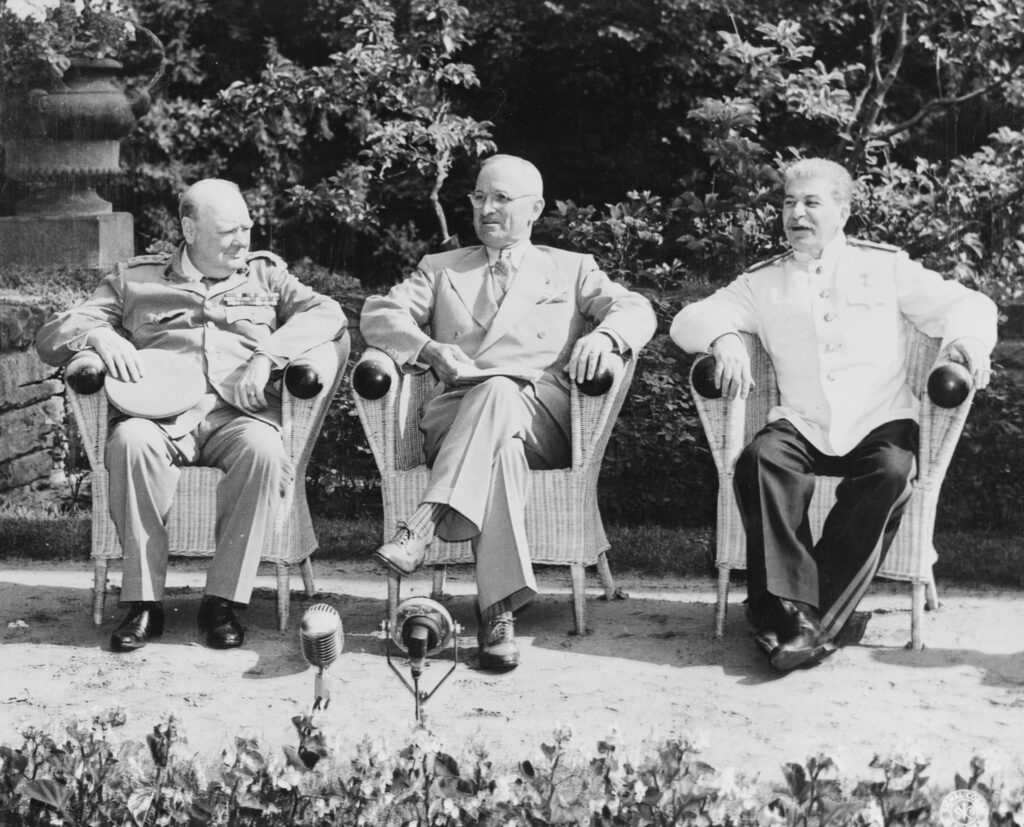
When World War II ended in 1945, Berlin found itself at the heart of a new conflict before the rubble had even been cleared. At the Potsdam Conference, held between 17 July and 2 August 1945, the Allied leaders confirmed the division of Germany and the nature of its occupation. The American, British and French sectors would form West Berlin and the Soviet sector became East Berlin.
This division initially seemed administrative, but tensions escalated rapidly as ideological differences between former allies became irreconcilable. By 1945, the United States and the Soviet Union had begun to emerge as ideologically opposed ‘superpowers’, each wanting to exert their influence in the post-war world.
The First Crisis: Berlin Blockade (1948-1949)
Joseph Stalin, the Soviet leader, imposed the Berlin Blockade from 24 June 1948 to 12 May 1949, cutting off all land and river transit between West Berlin and West Germany. This was the first major test of Western resolve in the emerging Cold War.
The Western Allies responded with a massive airlift to come to West Berlin’s aid. For 324 days, Allied planes landed in Berlin every minute during peak operations, delivering over 2.3 million tons of supplies. The blockade lasted 324 days and a total of 2,110,480 tons of freight was transported to West Berlin.
The Berlin Airlift became a symbol of Western determination and marked the beginning of Berlin’s role as a Cold War flashpoint.

The Ultimate Symbol: Construction of the Berlin Wall (1961)
By 1961, the situation in Berlin had reached a breaking point. East Germany was facing economic hardships and shortages, due to the effects of war and the ongoing reparations demanded by the Soviet Union. As a result, skilled and educated workers began to seek better opportunities in the West. The numbers were staggering: since 1949, 2.5 million people had fled to the West this way.
By July 1961 American officials estimated that over 1,000 East German refugees were crossing into West Berlin each day. The communist government was hemorrhaging its most valuable citizens.
On the night of August 12–13, 1961, the East German government, backed by the Soviet Union, began to build a barrier between East Berlin and West Berlin. What started as barbed wire would evolve into the most infamous wall in modern history.
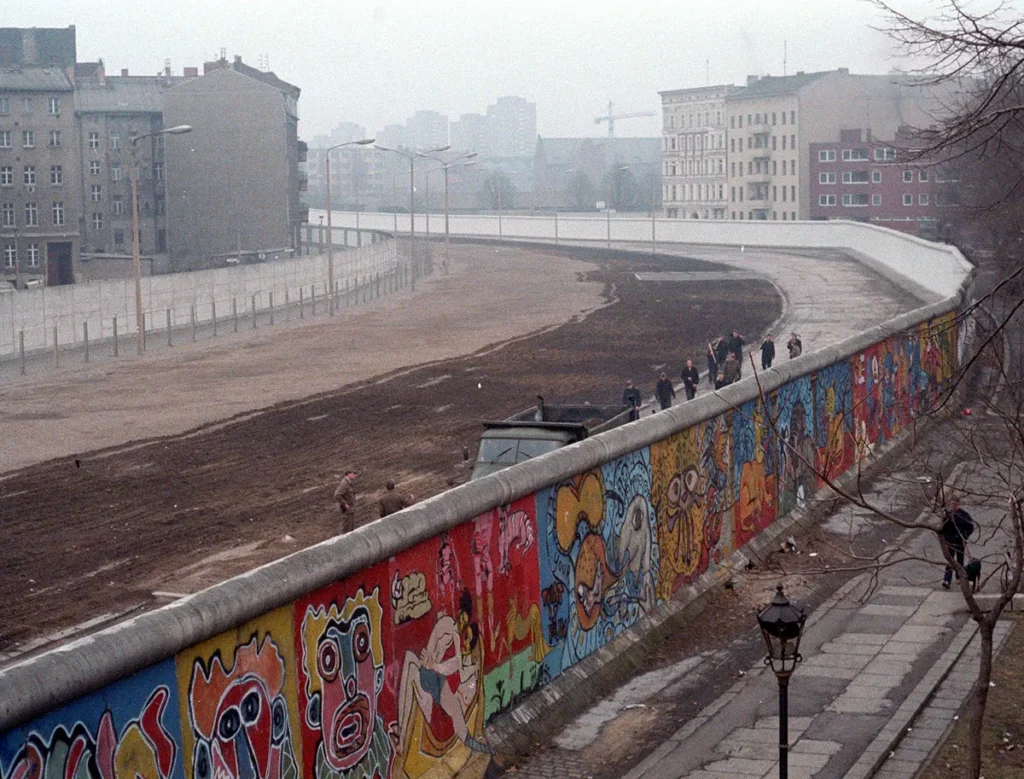
The Berlin Wall created two separate cities, two sides competing to be the best. Measuring 155 kilometres (96 miles) long and four metres (13 feet) tall, these walls were separated by a heavily guarded, mined corridor of land known as the ‘death strip’.
Tank Standoff at Checkpoint Charlie (October 1961)
The most dramatic moment of the Berlin Crisis came just months after the Wall’s construction. Once the checkpoint was designated a crossing point for members of the Allied armed forces, a month later in October 1961 it became the scene of a tank confrontation. American and Soviet tanks took up position and faced each other with weapons primed.
On October 22, 1961, a quarrel between an East German border guard and an American official on his way to the opera in East Berlin very nearly led to war. That day, American and Soviet tanks faced off at Checkpoint Charlie for 16 hours. This standoff represented one of the tensest moments of the entire Cold War, with the world teetering on the brink of nuclear conflict.

Life in the Divided City
For 28 years, Berlin remained split in two, creating parallel worlds just meters apart. After the wall went up, more than 260 people died attempting to flee to the West. More than 100 people died trying to cross the Berlin Wall over the course of its 28-year history.
The Wall became more than just a physical barrier – it was a symbol of oppression that divided families, friends, and lovers. Yet Berliners on both sides adapted, creating rich cultural and social lives within their respective sectors, always aware of the forbidden world just beyond the concrete.
Kennedy’s Solidarity: “Ich bin ein Berliner” (1963)
In June 1963, President Kennedy traveled to Berlin and delivered his famous “Ich bin ein Berliner” speech, declaring solidarity with the people of West Berlin. His words resonated far beyond the immediate audience: “There are many people in the world who really don’t understand, or say they don’t, what is the great issue between the free world and the Communist world. Let them come to Berlin.”
No other American politician had met with such joy and enthusiasm on a visit to Germany. Shortly after President Kennedy’s death in November of 1963, the square where he had made his famous speech was renamed the John F. Kennedy Platz.
The Wall Falls: November 9, 1989
On November 9, 1989, the head of the East German Communist Party announced that citizens of the GDR could cross the border whenever they pleased. That night, ecstatic crowds swarmed the wall. Some crossed freely into West Berlin, while others brought hammers and picks and began to chip away at the wall itself.
More than 2 million people from East Berlin visited West Berlin that weekend to participate in a celebration that was, one journalist wrote, “the greatest street party in the history of the world”. Germany reunited on 3 October 1990.

Cold War Attractions You Can Visit Today
Checkpoint Charlie
Located on the corner of Friedrichstraße and Zimmerstraße, it is a reminder of the former border crossing, the Cold War and the partition of Berlin. While the original guardhouse is now in the Allied Museum, a replica marks this historic spot where East met West.
The Wall Museum (Mauermuseum)
With 850,000 visitors in 2007, the Checkpoint Charlie Museum is one of the most visited museums in Berlin and in Germany. Take a look through the inventive methods people have used to escape from the GDR, such as a concealed luggage compartment in a VW car, a mini-submarine, a hot air balloon and a collapsed suitcase.
East Side Gallery
The longest remaining section of the Berlin Wall, now transformed into an open-air gallery featuring murals by international artists, turning a symbol of oppression into one of freedom and artistic expression.
Topography of Terror
Located on the former site of Nazi SS and Gestapo headquarters, this documentation center provides crucial context for understanding how Berlin became the center of Cold War tensions.
BlackBox Cold War
The Black Box is a flat, black, box-shaped building located a few metres from Checkpoint Charlie. The structure is dedicated to the Cold War and features authentic exhibits.
Berlin Wall Memorial (Gedenkstätte Berliner Mauer)
The official memorial includes preserved sections of the Wall, the death strip, and a documentation center that provides comprehensive insight into the Wall’s history and impact.
Allied Museum
Houses the original Checkpoint Charlie guardhouse and extensive exhibits on the Western Allies’ role in Berlin during the Cold War.
The Legacy Lives On
Berlin’s Cold War story is more than historical curiosity – it’s a testament to human resilience and the ultimate triumph of freedom over oppression. Walking through modern Berlin, you can still trace the Wall’s path marked by cobblestones in the street, visit museums filled with ingenious escape devices, and stand where tanks once faced off in the world’s most dangerous standoff.
The city that was once the symbol of division has become a symbol of unity, but the scars and stories of the Cold War remain embedded in its streets, buildings, and collective memory. For any visitor interested in understanding the 20th century’s most defining conflict, Berlin offers an unparalleled window into how ordinary people lived through extraordinary times.
Today, as we face new global tensions and challenges, Berlin’s Cold War history serves as both a sobering reminder of how quickly the world can divide and an inspiring example of how walls – both physical and ideological – can eventually fall.